
Frost in an open joint
Water sits in a slab joint rather than running off it. One hard winter and the pointing lifts, cracks or blows out altogether.
A separate service from house repointing, and a different job entirely. Failed, weedy or washed-out joints in patios, paths and steps — raked out and pointed in a mix meant for ground level.
Its own service, not an add-on
A wall joint sheds water. A paving joint holds it. That one difference is why patios, paths and steps go at their own pace, and why they want a different approach from the brickwork above them.
We point patios, paths, steps and their edgings across East Sussex — as a job in its own right, or alongside work on the house while we are there. The same rule applies as everywhere else on this site: if only part of it needs doing, that is the part we will quote for.
What goes wrong
Frost, growth, pressure washers and the wrong mix. Between them they account for nearly every failed patio we are called to.
Water sits in a slab joint rather than running off it. One hard winter and the pointing lifts, cracks or blows out altogether.
Once a joint opens, everything moves in. Roots widen it from below and the slab loses the support that was holding it level.
The quickest way to take out sound pointing. A lance held close will cut a joint straight out, then the slab starts to rock.
Paving takes standing water, salt and traffic. A mix meant for a wall will not stay in a horizontal joint for long.
What we do
Pointing is most of it. Where the problem is underneath the slab rather than between them, we will tell you that instead of pointing over it.
How it works
Exactly as we do on the house. We would rather point a third of a patio properly than all of it unnecessarily.
No charge. Patios rarely need doing wholesale — often it is one bay, the step nosings, or the edge course along a border.
Failed pointing is one problem. A slab that has lost its bed is another, and re-pointing over it only hides it for a season.
By area or by section, and we will say plainly which parts can be left alone for now.
Old material and growth out first, joints filled properly and struck off, and the paving washed down and left clean.
Our paving work
Our own photographs, kept separate from the house repointing work. More going up here as jobs finish.
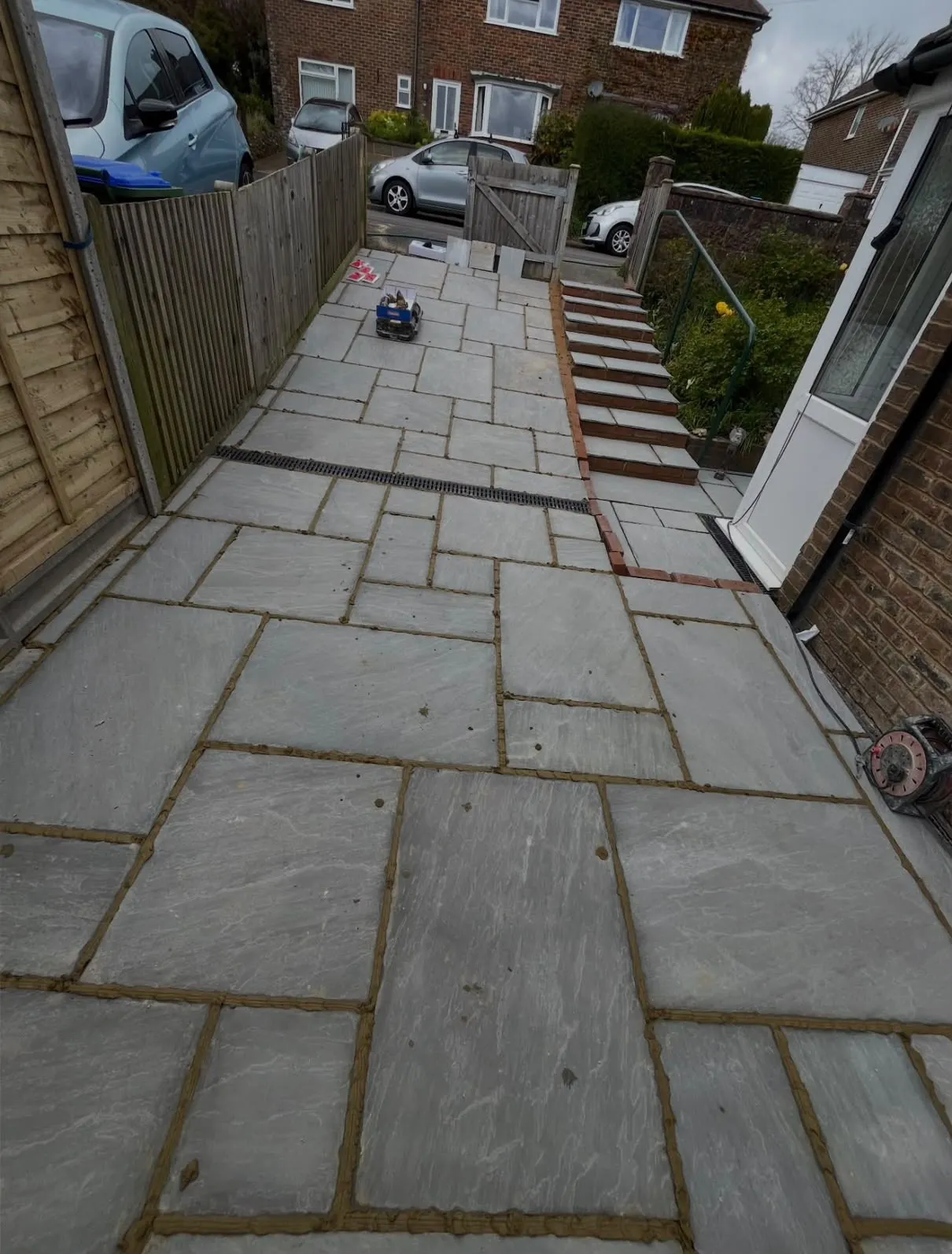
Grey sandstone paving with every joint pointed, drainage channels set in and brick-edged steps up to the path.
Paving · Joints pointed
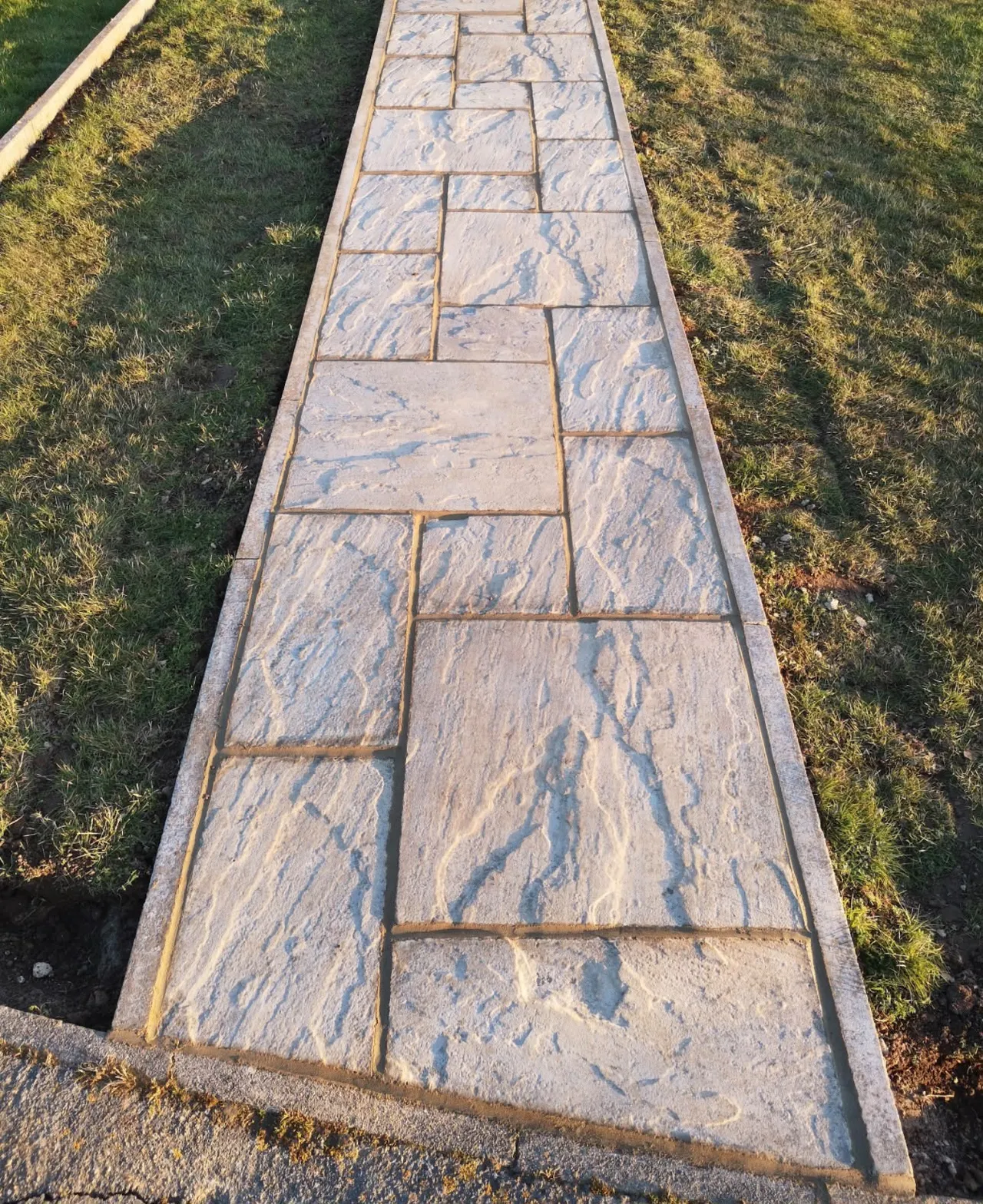
A riven slab path across the lawn, pointed joint by joint between a kerbed edge.
Paving · Joints pointed
Not sure whether yours needs doing?Send a photograph through Ask Mortar Mates — one close-up of a joint and one from further back showing the whole patio is usually enough for us to tell you something useful.
Common questions
No — and that is why it sits on its own page. The joints are horizontal, they hold water instead of shedding it, and they get walked on. Different preparation, different mix, different finish.
Usually not. Failure tends to start where water collects or where the edge is unsupported. If half of it is sound we will point the half that is not.
Not on its own. A rocking slab has lost its bedding, and pointing around it will crack again within the year. It needs lifting and re-bedding first.
Usually close, yes. Weathered pointing is rarely the colour it started, so on a patch repair we match what is there now rather than what it was when new.
Please do not. It takes out sound pointing along with the dirt and turns a small repair into a large one. Leave it and we will clean out what needs to come out.
Often, yes — if we are already on site it saves you a second visit. Ask when you ring and we will price both.
Send us a photo or have us come and look. Either way you will get a straight answer about whether it needs doing, and how much of it.